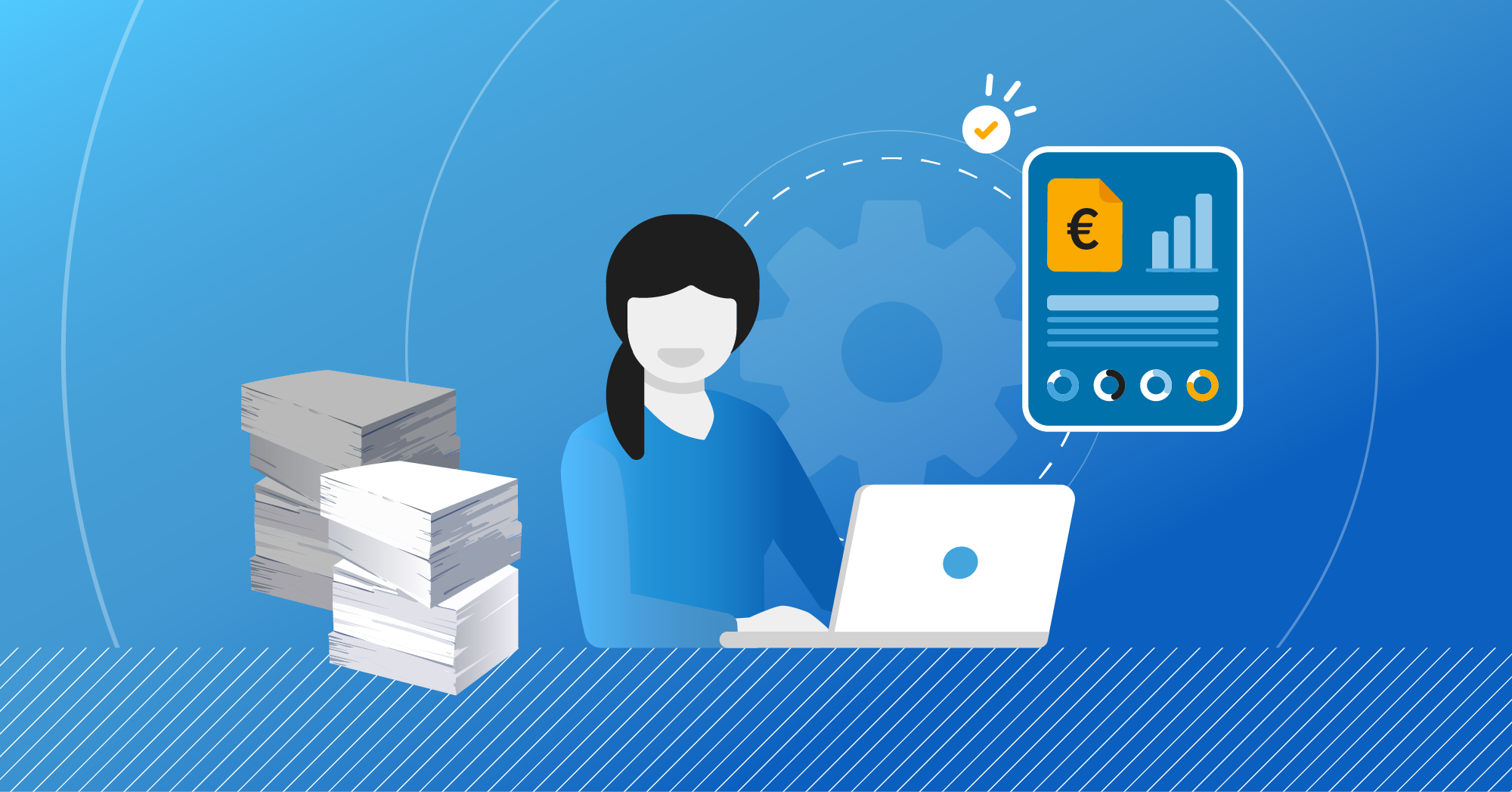
Automation in medium-sized businesses
Medium-sized companies are under growing pressure: A shortage of skilled workers, new legal requirements – such as the mandatory e-invoicing requirement from 2025 – and intense competition are demanding efficient, digital processes. At the same time, many accounting departments still operate with paper-based or semi-digital processes.
In this article, you’ll learn how to automate your accounting processes in just a few steps and with the right digital tools – saving time, money, and hassle.
These 5 challenges slow down your accounting
In many medium-sized companies, accounting is characterized by manual entries, analog approval processes, and isolated solutions. The result: susceptibility to errors, lost time, and high process costs.
- Manual data entry: Transposed numbers, duplicates and time-consuming corrections burden the accounting department.
- Media breaks: Incoming invoices are printed out, scanned again, or distributed via internal mail – digital information is forced back into analogue forms.
- Opaque processes: Without central control, companies lose track of approvals and payment deadlines – discounts are not used, reminders are sent – with direct cost consequences.
- High resource expenditure: Manual processing costs many times more per document than an automated solution.
- Lack of compliance: Paper-based procedures jeopardize compliance with legal requirements (GoBD, GDPR), which can lead to problems during tax audits.
The path to digital efficiency: Automation as the key
The solution lies in the consistent automation and digitalization of accounting processes. The following steps, in particular, are crucial for a successful transformation:
1. Centralization and standardization
Collect your invoices via a central digital mailbox or platform solution – whether by email, online portal, or other sources. Uniform formats and a structured incoming invoice process form the basis for efficiency.
2. Automated data collection
Instead of manual typing, modern software solutions—for example, those based on OCR and AI—take over the extraction of all relevant invoice data. This way, it is sent directly to the ERP or accounting system, eliminating any potential for human error.
3. Digital approval workflows
A digital approval process with clearly defined roles, deputization rules, and logging replaces the need for a file and telephone or written inquiries. This ensures prompt approval of invoices, secure discounts, and adherence to payment deadlines.
4. GoBD-compliant archiving
Digital archiving systems enable legally compliant, audit-proof storage of all invoices and easy retrieval of all files in a central system.
5. Integration and scalability
By connecting to existing systems, such as DATEV, you avoid duplicate entries and media disruption. Invoices and receipts can be easily transferred to your preferred accounting software, document management systems, and ERP solutions, or sent directly to your tax advisor.
6. Unified communication across multiple entities
Many medium-sized companies operate with multiple companies, branches, or subsidiaries. Without consistent digitalization, these structures often lead to redundant data storage and unclear responsibilities. A multi-tenant solution with clear workflows, a central dashboard, and automatic assignment per entity ensures transparency and efficiency – even across locations.
Why automation is an important, strategic investment
Many medium-sized companies hesitate because they think process optimization is complicated, due to a lack of acceptance within the team, or because they are afraid of the investment costs for one or more complementary accounting software solutions.
But the reality is that targeted training, good onboarding, and transparent communication reduce these hurdles. The costs quickly pay for themselves. Companies report:
- Cost savings of up to 80 % in invoice processing
- Error reduction and higher quality of accounting
- More satisfied employees who can concentrate on value-adding tasks
- Increased compliance through automatic logging
- Transparency about all ongoing processes and payment obligations
Conclusion: The future is digital – even in medium-sized businesses
Automating accounting processes isn’t a “nice-to-have,” but a necessary step for every medium-sized business that wants to remain competitive, efficient, and compliant. The good news: The technology is available. GetMyInvoices offers you all of these functionalities in one software solution that you can easily integrate with your existing systems. What’s needed is the courage to change—and a strong partner to accompany you along the way.
Would you like to learn more or get started right away? Our solutions for medium-sized businesses: Learn more Non-binding initial consultation: Book now