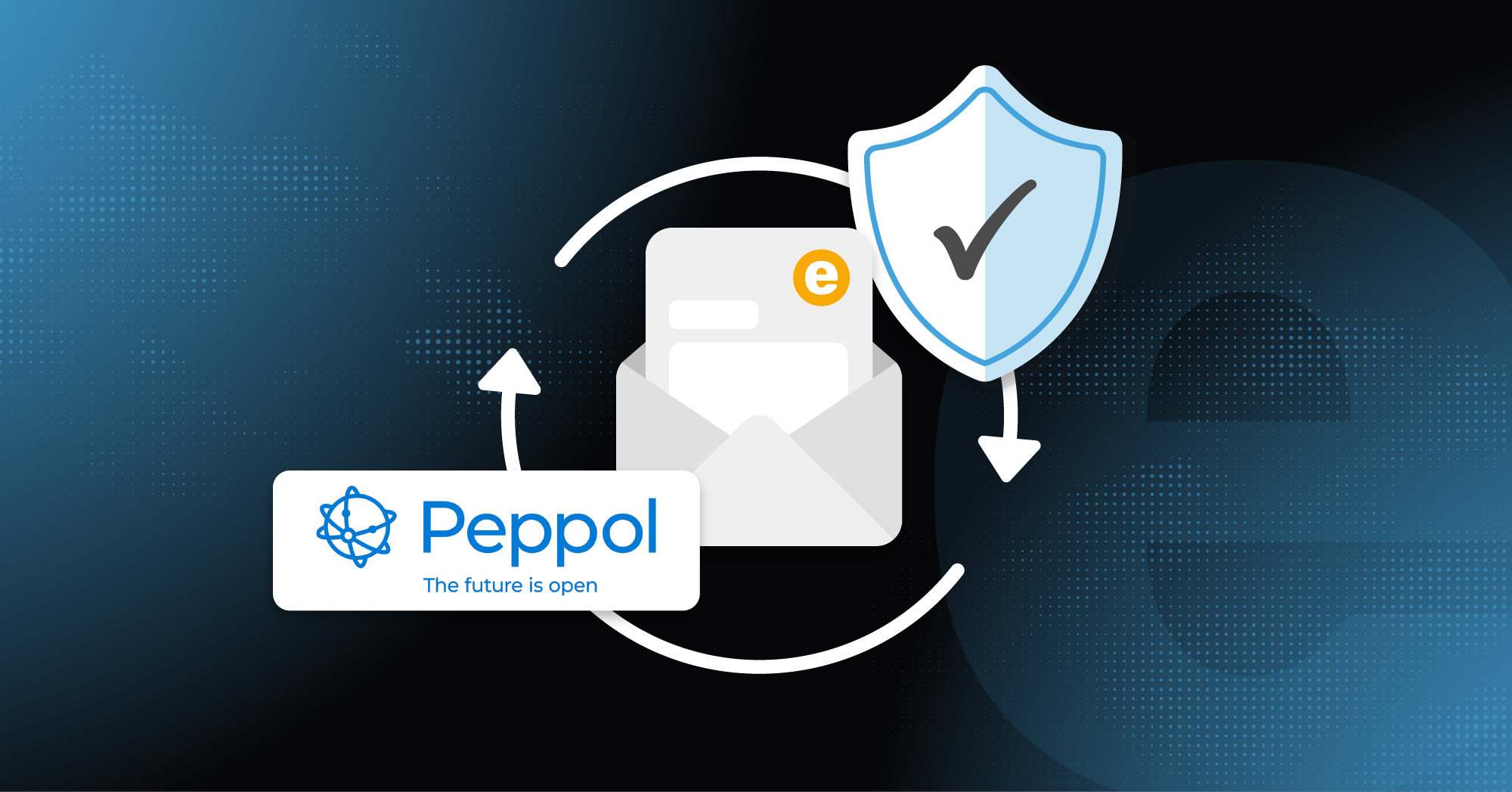
Imagine an invoice from your supplier landing directly in your accounting software. No PDF in your email inbox that someone has to manually open and enter. No typos when transferring amounts. The invoice is already there, machine-readable, and ready for further processing. That’s precisely the promise behind Peppol.
What is Peppol?
Peppol (originally for ‘Pan-European Public Procurement On-Line’) is managed by the Belgian non-profit organization OpenPeppol AISBL.
The network originated in 2008 as a European project for public procurement. Today, it is the established standard for global electronic document exchange and is increasingly used in the B2B sector as well.
*Important: Peppol is not a file format. XRechnung and ZUGFeRD are formats, i.e., the way an electronic invoice is structured and encoded. Peppol is the network over which these invoices are transported from A to B. *
Think of Peppol like a mobile network. The network determines how data is transmitted securely and who is connected. The language people speak to each other, i.e., the invoice format, is separate from this.
Companies that want to send or receive invoices via Peppol need a certified Peppol access point, i.e., a service provider that acts as a technical link in the network.
The Peppol ID – your address in the network
Every company participating in the Peppol network receives a unique identifier, the so-called Peppol ID. This is assigned by the service provider during registration.
The Peppol ID works similarly to a phone number. Anyone who wants to send you an invoice via Peppol only needs this ID to find you in the network and deliver the invoice.
The Peppol ID consists of a four-digit scheme identifier and a company identifier. For private companies in Germany, the VAT ID is generally used, combined with the prefix 9930, for example: 9930:DE123456789.
Alternatively, the Global Location Number (GLN) with the prefix 0088 is also possible. The scheme identifier tells the network which identification system is used; the number following it uniquely identifies your company.
Why is Peppol relevant to you now?
Since January 1, 2025, electronic invoicing has been mandatory in Germany for transactions between domestic companies. It is important to distinguish between two different obligations.
The obligation to receive electronic invoices has been in effect since January 1, 2025, for all companies without exception and without a transition period. This means that every domestic company must now be able to receive and process structured electronic invoices. A simple PDF does not meet this requirement.
The obligation to issue electronic invoices is phased in. Until the end of 2026, invoice issuers may still use paper invoices or other electronic formats such as PDFs, provided the recipient agrees. For companies with an annual turnover of less than €800,000, this deadline is extended to the end of 2027. From January 1, 2028, the full obligation to issue electronic invoices applies to everyone.
This is where Peppol comes in. The network offers a standardized and secure way to transmit precisely these structured invoices. Instead of sending an XRechnung (e-invoice) via email, which is technically possible but prone to errors and manipulation, the invoice is delivered directly to the recipient via the Peppol network.
Peppol is already well-established in large parts of Europe and is considered the standard for electronic invoicing in countries such as Sweden, Belgium, and the Netherlands. Its Europe-wide reach makes Peppol particularly attractive for companies operating across borders.
What advantages does Peppol offer companies?
**Directly process structured e-invoices **Invoices received via the Peppol network are already fully structured data sets. While a PDF invoice must first be extracted or manually checked, all fields in a Peppol invoice are machine-readable from the outset and can be directly imported into your accounting software. Our article demonstrates the concrete difference this makes to the quality of your accounting. How e-invoicing is transforming data quality in accounting .
**Secure transmission in the Peppol network **An invoice sent via email can be altered during transmission without the recipient or sender noticing. This is impossible with the Peppol network. The transmission is encrypted, and data integrity is guaranteed.
**Document receipt of invoices in a verifiable manner. **Whether an invoice sent by email has actually reached the recipient is difficult to prove definitively after the fact. In the Peppol network, delivery is documented and traceable, which is a clear advantage in case of disputes or during audits.
**One Peppol ID for all suppliers **With a single Peppol ID, you tell all your suppliers how to send you invoices. No need to match different email addresses or transmission methods for each individual supplier. One address for all.
**Compliant with the German e-invoicing regulations **Anyone who receives and sends invoices via Peppol operates within a tested, standardized framework and is therefore on the safe side with regard to the requirements of the e-invoicing obligation in Germany.
Frequently asked questions about Peppol
**Do I have to use Peppol or is it voluntary? **The short answer: Peppol is not a mandatory channel for private companies in Germany.
The mandatory e-invoicing law specifies the required format for invoices, such as XRechnung or ZUGFeRD. However, it does not specify the transmission method. Peppol is one of several permissible transmission methods, alongside email and other electronic interfaces.
The practical advantages of Peppol explain why it still makes sense: structured, automated input, tamper protection, and a uniform addressing system for all suppliers. Furthermore, anyone who adopts Peppol today is positioning themselves for the coming years, in which Peppol will continue to gain importance across Europe.
**What happens if my supplier isn’t using Peppol yet? ** This is still the case with many suppliers in practice today. Peppol is gaining ground, but is not yet in widespread use.
The good news: Receiving invoices via Peppol doesn’t replace other methods, but rather complements them. If a supplier sends you an XRechnung (e-invoice) by email, you can still receive and process it. If that same supplier eventually switches to Peppol, the invoice will automatically reach you via the network, without you having to change anything on your end.
Peppol therefore functions as an additional, structured channel that runs in parallel to existing processes and gradually replaces them as more participants register in the network.
Peppol and GetMyInvoices
GetMyInvoices already receives your invoices via email and from online portals. As a certified Peppol Service Provider, we now also offer receipt via the Peppol network – for everyone: GetMyInvoices customers can now register their own Peppol ID free of charge, directly within the product.
What this means for you:
- Invoices received via Peppol arrive directly in GetMyInvoices as structured data. You handle review, approval, and payment centrally, without any manual data entry. The invoice is then sent to your accounting software fully prepared for posting.
- Peppol transmits encrypted and signed data. This ensures that the invoice arrives at your address unchanged.
- Every delivery is documented in the network. This is a clear advantage in the event of a tax audit or dispute.
Here’s how to register your Peppol ID:
- Log in to GetMyInvoices or register for free first.
- Select „Peppol“ in the profile menu in the top right corner.
- Complete the Peppol registration process. Your Peppol ID will be active within a few minutes.
With the introduction of mandatory e-invoicing, Peppol is becoming increasingly important for more and more companies. Your own Peppol ID ensures you’re prepared. Register your Peppol ID now in GetMyInvoices