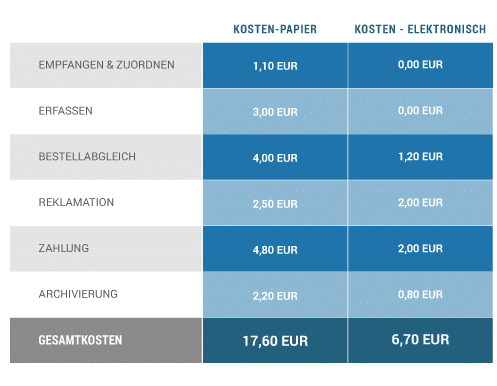
50% of working time in office and administration is spent searching for documents and information. No wonder electronic invoices are becoming more and more widespread. Many companies recognize the enormous savings potential that results from using electronic invoice management systems. By switching to electronic invoices, storage and administrative costs can be reduced, invoice processes made more effective, and turnaround times shortened. According to a Billentis market study , the average savings potential for incoming invoices compared to managing paper invoices is 62% and corresponds to an average value of €10.90 per invoice.
Legally speaking, processing electronic invoices poses no problems; invoices no longer have to be in paper form to be legally relevant. Section 147 of the German Fiscal Code (AO), paragraph 2: If the principles of proper bookkeeping are observed, the paper originals of certain documents subject to retention requirements may be destroyed. All advantages at a glance: - clear document management
- simplified payment transactions
- receivables under control
- liabilities under control
- up-to-date evaluations possible
You can see exactly which process costs can be saved at which process steps in our infographic, using the example of incoming invoices to be processed.