Bogus self-employment can be costly for both clients and contractors. Many freelancers aren’t even aware that they are bogus self-employed. Read here what penalties can be expected and how you can avoid this employee-like status.
Table of Contents:
- What is bogus self-employment?
- Who checks for bogus self-employment?
- What penalties can be expected for bogus self-employment?
- How can you protect yourself from bogus self-employment?
Normally you work as a freelancer for several clients. But right now a few prospects have fallen through or projects have ended, so that you are currently only working for one client? Then bogus self-employment may apply - at least according to the definition of the German Pension Insurance Fund. But what exactly distinguishes a self-employed person from a bogus self-employed person?
What is bogus self-employment?
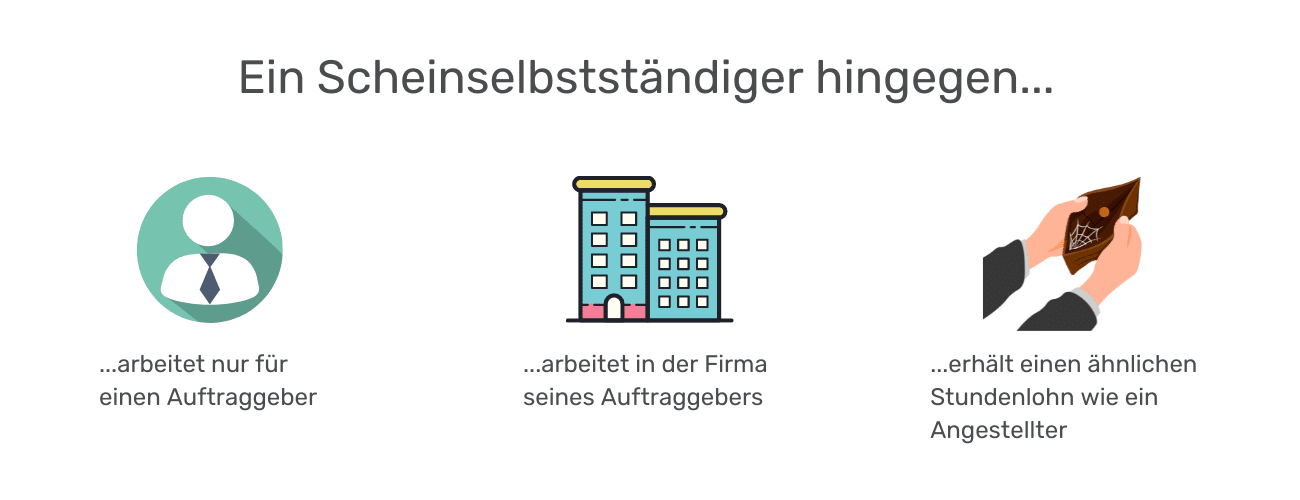
Freelancers who are treated like employees by their client are regularly exposed to accusations of bogus self-employment. This means they often work for only one client in that client’s office premises and often receive a low hourly wage - similar to that of a permanent employee.
Although they are dependently employed, they do not enjoy the benefits of a permanent employee. For example, they have to take care of their own health insurance and retirement provisions. In an official permanent position, the employer would have to cover half of the social security contributions. In addition, they can quickly lose their client: after all, they have no notice period and can therefore be “dismissed” immediately. Unlike permanent employees, the employer can thus quickly get rid of their bogus self-employed freelancers and enjoys high flexibility as a result. That’s why bogus self-employment is generally more attractive for clients than for freelancers.
What is the difference between a self-employed person and a bogus self-employed person
The federal courts have defined criteria by which self-employed freelancers are distinguished from bogus self-employed ones. A self-employed person is normally recognized by these characteristics:
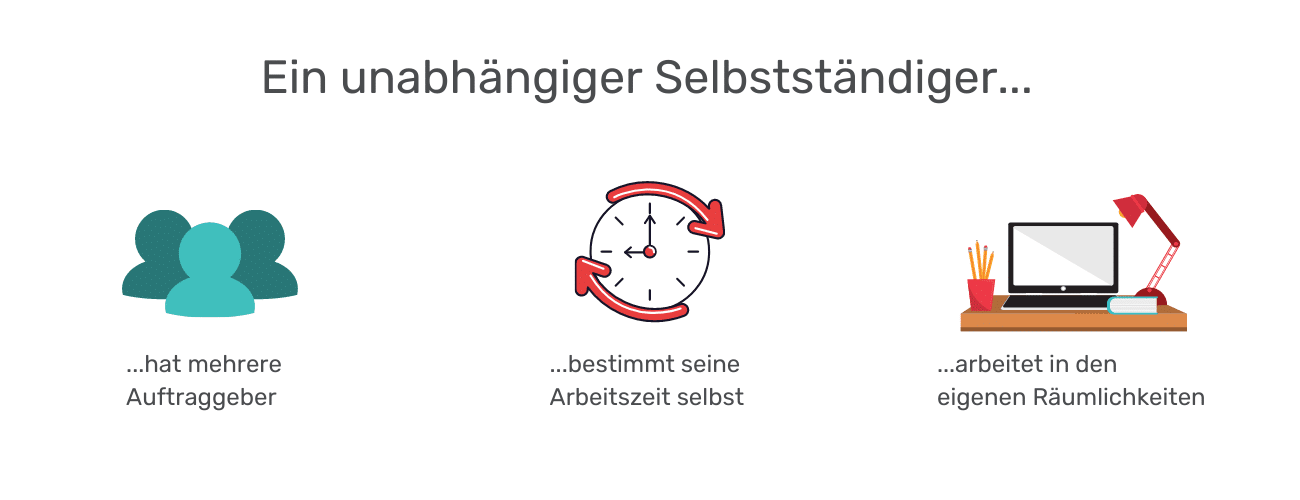
What characterizes a self-employed person
As a rule, a “genuine” self-employed person has several clients for whom they work simultaneously. They are independently employed and therefore determine their own place and hours of work. In addition, a self-employed person often has their own (office) premises and does not work on-site at the client’s premises (unless this is absolutely necessary). Another criterion that speaks for the status of self-employed can be a personal website on which they advertise their business. It is also important that the self-employed person bears entrepreneurial risk. This is not the case for an employee, for example.
In this case a freelancer is presumably bogus self-employed
A bogus self-employed person, on the other hand, often works for only a single client. Or there is a financial dependency on a client who accounts for more than 80 percent of the total order volume. The bogus self-employed person often works on the client’s premises and must even coordinate their own vacation with the client. Auditors also become particularly suspicious if the freelancer receives only a low hourly wage similar to that of a permanent employee. In short: if the freelancer’s relationship to the client is barely distinguishable from that of a permanent employee, bogus self-employment is probably present.
Beware of jumping to conclusions!
Based on these criteria, the classification may seem very clear at first glance. But beware: there is no clear-cut distinction. In fact, some past rulings on bogus self-employment even contradict each other. That’s why there is currently unfortunately no clear legal definition in Germany to confirm a freelancer’s self-employment beyond doubt. This is a circumstance that has often been criticized by trade associations and politicians.
Who checks for bogus self-employment?
The official procedure for checking bogus self-employment is called, in bureaucratic German, the status determination procedure. It can be initiated, for example, by the responsible tax office, the Financial Control of Illicit Work unit of the main customs offices, or the health insurance provider. The status determination procedure is then carried out by the German Pension Insurance Fund.
This is why the German Pension Insurance Fund wants to protect bogus self-employed people
The German Pension Insurance Fund has been taking decisive action against bogus self-employment for many years. The insurer justifies its approach primarily with employee protection: after all, bogus self-employed freelancers have no entitlement to vacation, receive no minimum wage, and can be “dismissed” at any time. So they do not benefit from the advantages of a permanent employee, even though they are dependently employed. According to the Pension Insurance Fund, bogus self-employed people are to be protected from this imbalanced employment relationship.
Association of Founders and Self-Employed in Germany (VGSD) criticizes non-neutral review body
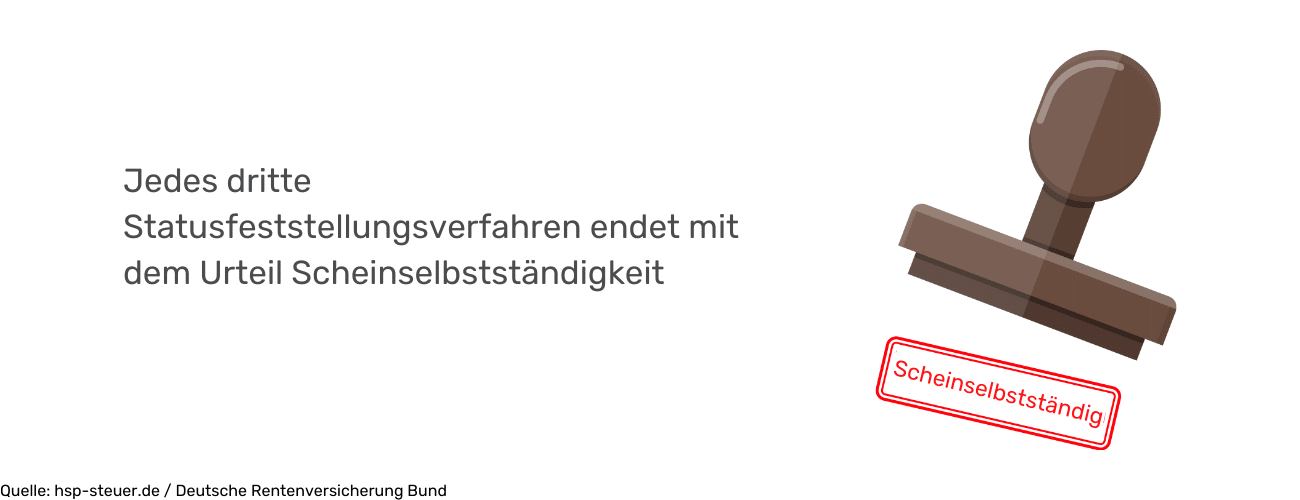
At first glance, these are noble goals. But on closer inspection, it also becomes clear: the German Pension Insurance Fund has a financial interest in more freelancers being “exposed” as bogus self-employed. After all, the insurer benefits when more social security contributions are paid. The Association of Founders and Self-Employed in Germany e. V. (VGSD) therefore criticizes that the Pension Insurance Fund cannot conduct a neutral and unbiased review. Whether that’s true remains to be seen. In any case, roughly every third status determination procedure by the insurance fund ends with a ruling of bogus self-employment .
What penalties can be expected for bogus self-employment?
But even more important is: what happens to the client and the contractor if bogus self-employment is actually officially determined?
Penalty for the client when employing bogus self-employed people
The client is hit hardest in this case. If bogus self-employment of your freelancer is determined, you must retroactively pay social security contributions and wage tax (plus late payment surcharges) for up to four years. The statute of limitations for this is five years. If intent is established, the period can be extended to thirty years. In addition, the client can be subject to a fine or even imprisonment .
Penalty for the contractor for bogus self-employment
Such a penalty is not to be expected for the bogus self-employed contractor. Nevertheless, in the event that bogus self-employment is determined, the freelancer may also have to retroactively pay social security contributions and wage tax. But even without a penalty, this can become quite expensive - depending on how long they were or are dependently employed. In addition, they lose their status as self-employed and can now sue to be recognized as an employee of their client’s company. This entitles them to protection against dismissal, continued pay in case of illness, and vacation days - just like a regular permanent employee.
How can freelancers protect themselves from bogus self-employment?
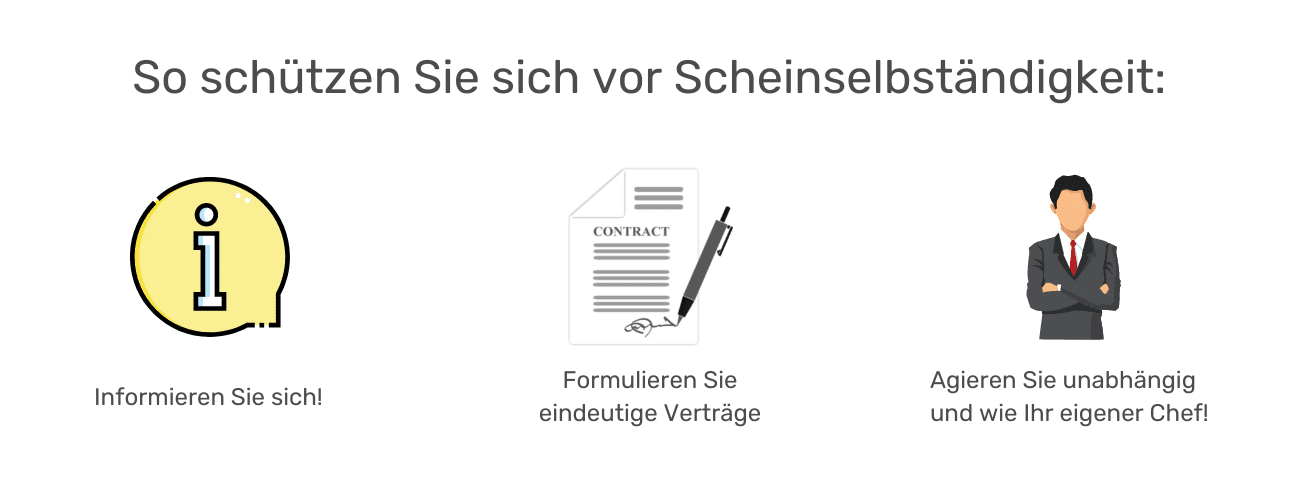
The first step to avoiding bogus self-employment is to get informed! Because many cases of bogus self-employment arise from pure ignorance - and as we know, ignorance is no excuse. In addition, you should check all contracts between you and your client for certain wording. It is important that your client has no right to give you instructions and, for example, may not dictate your working hours to you - this should also be documented in writing in the contract. In addition, spatial separation also makes sense so that bogus self-employment cannot be assumed in your case.
More helpful information for freelancers
Besides the Damocles sword of bogus self-employment, freelancers must master several other challenges. Such as regularly writing legally compliant invoices - and unfortunately sometimes reminders too. Read here what information must be included on a proper invoice or reminder:
Freelancers: How to write a correct invoice or reminder (including template)!