The work is done, now all you have to do is issue an invoice? Read here how to issue a correct invoice including all required mandatory information.
Table of contents:
- Indication of the tax number
- Free template
- Mandatory information
- Small business owner
- Small amount invoice
- Manage invoices with GetMyInvoices
The most important answers to writing invoices for freelancers at a glance:
How do freelancers write an invoice?
To create an invoice, freelancers first need a tax number or sales tax identification number (VAT ID). You can obtain both numbers from your local tax office.
If you have already received these numbers from your tax office, you can easily create the invoice in Word or with an accounting program including the required mandatory information.
What mandatory information is included on the invoice?
The invoice of a freelancer subject to VAT must contain this information:
- Name and address of the freelancer
- Name and address of the customer
- Date of invoice
- Tax number or VAT ID
- Scope of the service
- Performance period
- Consecutive, unique invoice number
- Net invoice amount
- Sales tax (7 %, 19 % or none with reference to your status as a small business owner)
- Gross invoice amount
What do small business owners need to consider when issuing invoices?
As a small business owner, you are exempt from sales tax and therefore do not have to include sales tax (also known as VAT) on your invoice. You must indicate your status as a small business owner on your invoice. For example, this note could read like this:
“According to Section 19 UStG, the invoice amount does not include sales tax.”
What mandatory information is not required for a small amount invoice?
For invoices under 250 euros gross, this information may be omitted:
- Address and name of the invoice recipient
- bill number
- Performance period
- Net invoice amount
- Tax number or VAT ID
The German bureaucracy doesn’t make it easy for you as a freelancer to create a correct invoice. Because here you have to fulfill a number of mandatory details. But that’s not all: There are also some exceptional cases when it comes to invoicing. This depends on whether you collect sales tax, are a small business owner or issue an invoice for small amounts. We have summarized all cases clearly and understandably for you:
The correct tax number on your invoice
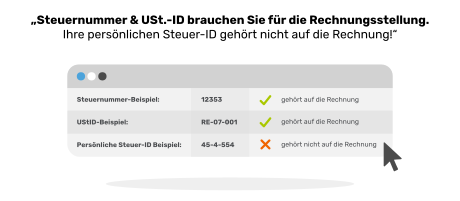
In order to be able to issue an invoice as a freelancer, you must first officially register as a freelancer with your local tax office. ****You will receive your tax number here , which must not be missing from the invoice. In practice, this tax number looks something like this: 01/101/10001. If you want to send invoices to other EU countries, you also need a so-called sales tax identification number (VAT ID for short). A German VAT ID usually looks like this: DE100000009
**One tip: ******Apply for the VAT ID It’s best to do so right away, even if you’re not currently serving a customer in another EU country. If this happens, you will have the VAT ID ready immediately and will not have to wait until the tax office assigns you such a number before issuing the invoice.
When do I actually use which tax rate?
The first question that is important here is: Do you even have to show sales tax on your invoice? This depends on whether you are at the tax office ****registered as a small business owner are. If you are officially listed as such, you don’t have to ****value added tax show on your invoice. If you are registered with your tax office as a freelancer subject to VAT, you must show 7 or 19 percent VAT on your invoice. The regular tax rate is 19 percent. Only if, for example, you offer cultural services (which can also include writing journalistic texts, for example) are you entitled to the reduced tax rate of 7 percent. If you are unsure which tax rate is right for you, please consult your ****Tax Consultants !
Free invoice template
In addition to the correct tax rate and the correct tax number on the invoice, you must of course also provide a few other mandatory details on the invoice. So that nothing goes wrong and you don’t forget any of the information, download this free template from GetMyInvoices:
Feel free to customize this template according to your wishes in terms of formatting, font and, if necessary, your company logo!
Mandatory information on the invoice: a checklist
Once you have created your invoice, check it again step by step ****Mandatory information . The following points should definitely be included:
- Your name and address
- Name and address of the customer
- Date of invoice
- Tax number or sales tax identification number (VAT ID)
- Type and scope of the service
- Performance period
- Individual invoice number
- Net invoice amount
- Sales tax (7 %, 19 % or none with reference to your status as a small business owner)
- Gross invoice amount
In addition to these mandatory details, it is of course useful for you to specify a payment deadline and your bank details so that the customer can transfer the amount to you.
Small business owners should keep this in mind when issuing invoices
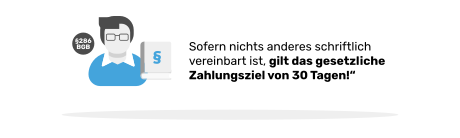
If you are registered as a small business owner, i.e. you did not earn 22,000 euros in the previous year and are not expected to earn more than 50,000 euros in the current year, you may be registered as a small business owner with your tax office. In this case, you must also provide all mandatory information on your invoice. However, there are two exceptions: You do not have to list the tax rate and the distinction between gross and net invoice amount, as you are exempt from sales tax as a small business owner.
But what is important is: You must inform your customers on your invoice that you do not charge sales tax. And for example with this sentence: “According to Section 19 UStG, the invoice amount does not include sales tax.”
What actually applies to small-value invoices?
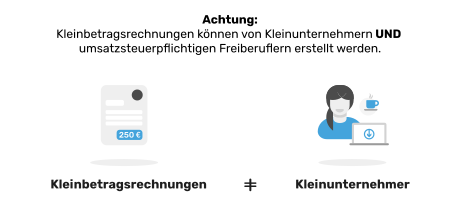
In addition to the regular invoicing for freelancers and the small business regulation, there is another special regulation: invoicing for small amounts under 250 euros gross. The law allows you to invoice these small amounts with less effort. This means that these mandatory details are no longer required on the small amount invoice:
- Address and name of the customer
- bill number
- Performance period
- Net invoice amount
- Tax number or VAT ID
A small amount invoice only needs to contain the following information:
- Your name and address
- Scope of the service you provide
- Gross invoice amount
- If applicable, the sales tax rate that applies to you
Manage invoices collectively with GetMyInvoices
The tip for you as a freelancer: You can easily collect your invoices and other receipts with GetMyInvoices and automatically assign them to your bookings. Try it now!