The advancing digitalization of the economy, public administration and everyday life naturally does not stop at the doors of the tax office. This article explains which facets and aspects digitalization includes for tax advisors.
Table of contents:
- Tax administration is becoming more and more digital
- Digitization of processes at tax advisors
- Digitalization of marketing and external representation
- Digital advice from tax advisors
- Approach digitalization step by step
- Does digitalization make tax advice unnecessary?
Frequently asked questions and answers about digitalization from tax advisors
The term “TaxTech” often appears in the context of the digitalization of accounting and taxes. This brings together a number of young companies that offer corporate customers digital services relating to taxes.
One thing is certain for experts: tax advisory professions will not disappear. However, digitalization will bring about a change in the field of activity.
The tax law firm lives from its reputation and the trust of its clients. That is why security must play an important role when using digital technologies.
When it comes to taxes and tax advice, most people probably primarily think of large mountains of paper. And paper-based receipts still play an important role in the everyday life of the tax office. But tax advice is becoming increasingly digital.
Tax administration is becoming increasingly digital
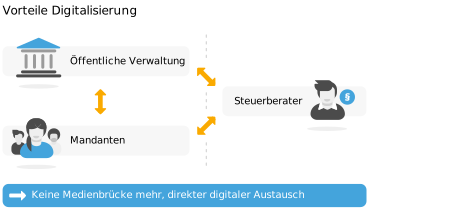
Digitalization has had tax advisors firmly under control for a long time. The exchange with the tax authorities is increasingly digital. And the authorities themselves are offering more and more services directly online and digitally.
Clients use industry solutions and apps to manage tax-relevant information and data. This also applies to private clients.
In order to be efficient as a tax advisor and avoid duplication of work and thus potential errors, the consistent digitalization of the law firm is in your own interest.
Digitization of processes at tax advisors
Working in tax consulting is exciting and challenging because tax consultants have to deal with many different people and different companies. The clientele includes “digital natives” who already run a paperless office, but also sole proprietors who bring in the famous box of (unsorted) receipts.
Digitalization has great advantages in all preparatory activities and support functions. When it comes to digitization in the tax office, it should now be a given that the accounting should be taken over directly by clients, which they process themselves using cloud-based accounting software. This requires the appropriate know-how from the employees.
Document management system as the basis of digitization
At the heart of the digitized law firm is a document management system (DMS), which takes care of the audit-proof storage of all types of incoming and outgoing documents. The documents provided by clients also end up there. If they have the technical equipment for scanning, it is helpful to prepare an information sheet showing the resolution and format in which the receipts should be scanned.
A DMS also makes internal collaboration in the law firm easier because processes, including setting deadlines, can be handed over to the responsible person. This also applies to queries from the law firm to clients.
Digitize paper-based files using OCR
In this way, the paper-based tax file becomes a digital file. In order to consistently use the efficiency of digital processes, documents provided by clients who do not use digital tools must of course be integrated into their own processes as quickly as possible. Correspondingly high demands must be placed on an OCR solution (optical character recognition) and the hardware for scanning.
When selecting hardware and software, a law firm is not necessarily dependent on using all of Datev’s modules and tools. When purchasing, you just have to make sure that the appropriate interfaces and certificates for data security and GOBD are available.
It should almost go without saying that a digitalized law firm also uses the same tools for its in-house processes, i.e. its own incoming and outgoing invoices are managed in the same DMS.
Today, booking-relevant documents are often created in purely digital form, for example at retail companies that sell via platforms such as Amazon. With GetMyInvoices’ solution, companies and tax advisors save time and effort collecting and processing receipts. The system does this automatically.
To ensure that everything fits together in the end, it is highly recommended to seek professional advice from specialists.
However, digitization for tax advisors does not only include these obvious internal processes and procedures.
Digitalization of marketing and external representation
Digitalization now forms the basis of business models and value creation for many companies. E-commerce, which has increased enormously in recent years, is the best example of this. Digital companies have correspondingly high demands on a tax office.
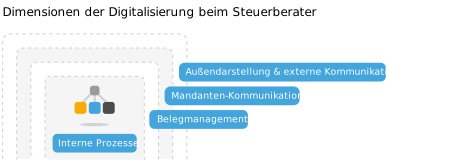
Digital competence should already be evident in the external presentation. A technically flawless, informative and attractively designed homepage is an absolute must. This also means good visibility in search engines, which is supported by SEO measures and a page on Google My Business.
Digital advice from tax advisors
In recent years, there have been significantly fewer personal encounters with clients due to the fight against the pandemic. At the same time, many people have also learned to appreciate the advantages of digital meetings. Meetings were held directly from your desk at home or from the office.
Digital communication via screen saves time, is flexible and saves travel costs. And it doesn’t have to be impersonal. It just depends on how the atmosphere of the conversation is created.
A modern tax law firm also underlines its competence in this respect and offers clients and interested parties the opportunity to have a conversation using conferencing software (e.g. Zoom, Teams, etc.). Busy and working people in particular will welcome this uncomplicated form of contact.
Such time-saving and flexible video meetings are also suitable for initial discussions, especially if interested parties can book the appointments themselves digitally, for example using software such as Calendly.
Approach digitalization step by step!
Internal processes, external communication and marketing: There are so many points of attack when tackling the digitalization of the tax office that there is quickly a risk of getting lost here. That’s why it makes sense to carry out digitalization in individual stages and clearly defined projects.
A good approach could be to place a clear focus on internal processes and data exchange with clients. This increases efficiencies and ultimately saves costs.
Digital offerings such as advice via video and online marketing in the form of a modern website are also projects that can easily be outsourced to service providers and require little active control.
Does digitalization make tax advice unnecessary?
Accounting solutions in the cloud, automated document recognition and processes: Quite a few tax advisors are asking themselves whether the profession will simply die out due to growing digitalization. Does tax advice still have a future?
The answer also agreed upon by experts: Absolutely. The profession will neither die nor become redundant. But the job profile will change. Digitalization will reliably carry out routine work and thus increase efficiency in the law firm.
This leaves more time for advising clients. Individual solutions for tax optimization or tax avoidance will remain in demand. This also applies to the launch of new companies. The job profile of tax advisors is becoming more demanding and even more diverse.
And thanks to networking and digitalization, expert advice can be provided much earlier because data and key figures are available much more quickly.