Freelancers often look worriedly at the first invoice they issue. In fact, there are some requirements that need to be met. Read here which information should not be missing on your invoices.
Table of contents:
- Mandatory information on the invoice according to Section 14 UStG
- Free invoice template
- Mandatory information for small businesses
- Mandatory information for small-value invoices
- Mandatory information on electronic invoices
- Easily manage invoices with GetMyInvoices
The most important answers to mandatory information on the invoice at a glance
Your name and address, the invoice date, your tax number and some other characteristics. However, there are special cases: If you are a small business owner or only invoice a small amount, some information is omitted.
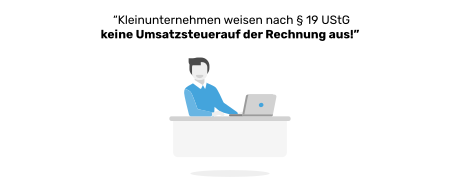
There is no need to specify the tax rate and the gross invoice amount. What is important, however, is a corresponding note such as: “The invoice amount does not contain sales tax in accordance with Section 19 UStG.”
If the invoice amount is less than 250 euros (including taxes), you do not have to note the customer’s name and address. Information about the invoice, tax or sales tax identification number is also not mandatory.
The mandatory information remains the same as for paper invoices. Make sure to use an unchangeable format like PDF and get your customer’s consent.
As a freelancer, you have your hands full: In addition to the actual work, there are important activities such as customer acquisition and bureaucratic obligations. The latter also includes issuing proper invoices: These contain valuable information for you, your customers and, if necessary, for your tax office. However, it is not easy to keep an overview given the multitude of legal regulations. The requirements for an invoice also depend on your situation: Are you a small business owner? Maybe you only issue small amounts? We would like to help you see through the thicket. Below you will find the mandatory information that you need for your work.
Invoices as a freelancer: What information is required?
Even if you don’t necessarily have a registered business, you still have to issue invoices to your customers. If you are at the beginning of your career as a freelancer, this matter is particularly arduous: although some information is voluntary, others must appear on the invoice. The exact specifications are in § 14 Sales Tax Act regulated. The legislature thus regulates nationwide uniform requirements that you must comply with. Anyone who has not yet dealt with the matter will come across a few questions: Do net and gross amounts have to be shown separately? What personal information do I have to disclose? Is it mandatory to provide my tax number?
Mandatory information on the invoice according to Section 14 UStG
You must definitely take some information into account for your invoice:
- Your full name and address and the customer’s name and address
- the date of issue of the invoice
- either the tax number or sales tax identification number (VAT ID). If you have a VAT ID, ideally provide both.
- Type and scope of the service: Here you list the services provided by naming them, for example: “Editing and mastering for podcast X”.
- the time of performance
- the invoice number: This must be done consecutively and may only be issued once for each invoice
- the billed fee (per hour or as a flat rate)
- the applicable sales tax rate, for example “19 % VAT and the corresponding amount
- the gross invoice amount, i.e. including tax
In addition to the points mentioned above, there is often other information on the invoice, including the freelancer’s email address, a greeting or a signature. None of these are required by law. However, some of the optional information is primarily in your own interest, such as providing your bank details. You need to Archive invoices for a period of ten years . If ever an error creeps into an invoice , this is usually not a problem: you can correct this.
Free invoice template

Free download: “Invoice template for small businesses” template:
Mandatory information on the invoice as a small business owner
You may be affected by the small business regulation: These requirements apply to you if your turnover did not exceed 22,000 euros in the previous year and is not expected to exceed 50,000 euros in the current calendar year. However, you must first contact your local tax office Classification as a small business owner apply for. Invoices require all of the points listed above - with two exceptions: Since you are exempt from sales tax, you can forgo specifying the tax rate and the gross invoice amount. However, a corresponding note is absolutely necessary:
It is best to point out the facts with a sentence like “The invoice amount does not contain sales tax in accordance with Section 19 UStG”.
Mandatory information for small amount invoices
If the invoice amount you issue does not exceed 250 euros (including taxes), some of the mandatory information is omitted: You do not have to provide the customer’s name and address. In addition, there is no obligation to provide an invoice, tax or sales tax identification number.
The legal situation is different for registered merchants: your company name can also be a fantasy term as long as it has distinctive character. As a small business owner, you shouldn’t value added tax you must also make this clear on invoices for small amounts (see above).
Mandatory information for electronic invoices
According to that Industry association Bitkom Electronic invoices are becoming increasingly popular: 43 percent of companies in Germany already send e-invoices to their customers.
Electronic delivery does not change the mandatory information. All you need is your customer’s consent - if they pay the invoice, their consent is also considered given. An electronic signature is no longer required, although you should look for an unchangeable format such as PDF. Also electronically delivered invoices must be kept for ten years.